Brand Architecture & Product Innovation:
Scaling a Global Heritage Label
Cleo Ferin Mercury | Co-Founder
The Business Challenge:
The brand launched in a heavily saturated luxury market with a traditional format that struggled with visibility and conversion. To scale beyond two local stockists, the business required a total Digital Transformation and a "structural disruptor" that could make luxury silk relevant to a younger, trend-conscious global audience.
The Solution:
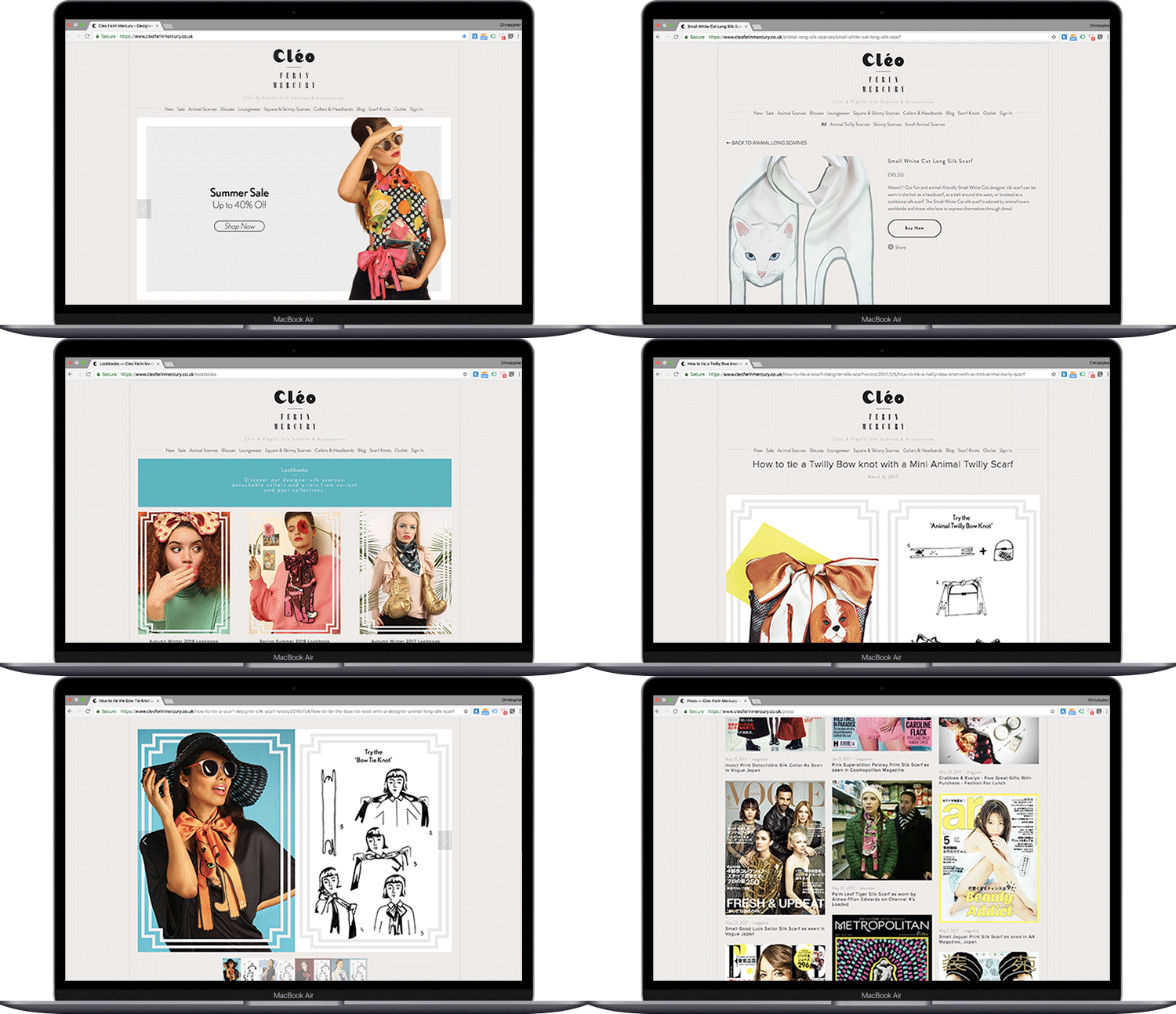
I joined the brand to lead its Brand Re-Architecture, beginning with a full UX/UI overhaul of the
e-commerce platform to improve user experience and conversion rates. I conceptualised the "Animal Long Scarf"—a structural innovation inspired by vintage fur stoles—that redefined the category by combining luxury materials with a playful, wearable silhouette. I further engineered the "Mini Animal Scarf" as a strategic entry-point product, opening a new collectible market at an accessible price point to drive customer retention and brand loyalty.
The Strategic Impact:
-
Operational Scaling: Successfully grew the brand from a niche studio into a global entity, debuting collections at New York, London and Paris Fashion Weeks.
-
Digital Transformation: Relaunched the brand identity and e-commerce infrastructure, moving from manual processes to a high-converting digital-first operation.
-
Market Diversification: Identified and captured a "collectible" market segment through Product Tiering (Mini vs. Large formats), increasing the Customer Lifetime Value (CLV).
-
High-Stakes Visibility: Secured a featured spot on BBC’s The Apprentice, where our products were central to the winning team’s triumph in the "Department Store" challenge.
-
Institutional Backing: Secured funding from the UAL Seed Fund and technical mentorship to refine production processes and global supply chain logistics
The User Journey:
From Niche Discovery to Collectible Ecosystem
Stage 1: Digital Infrastructure (The Foundation)
-
The Intent: To replace a low-visibility, niche web presence with a high-performance Conversion Engine that could support international scaling.
-
The Experience: I led a total UX/UI overhaul of the e-commerce platform, focusing on improving visibility and user experience to lay the groundwork for a global brand relaunch.
-
Strategic Impact: This was the Digital Transformation phase. It moved the brand from two local stockists to a digital-first operation ready for high-stakes international demand.
Stage 2: Structural Innovation (The Category Disruptor)
-
The Intent: To solve a "design puzzle" in a saturated market by creating a structural innovation that redefined luxury silk for a modern audience.
-
The Experience: I conceptualised the "Animal Long Scarf"—a precision-cut, wearable silhouette inspired by vintage fur stoles but executed in high-quality, digitally printed silk.
-
Strategic Impact: This was the Anchor Product. It acted as a structural disruptor that secured high-end press features in Vogue and Harper’s Bazaar and established our signature "Brand World".
Stage 3: Market Expansion (The Collectible Ecosystem)
-
The Intent: To lower the barrier to entry and increase Customer Lifetime Value (CLV) through Product Tiering.
-
The Experience: I engineered the "Mini Animal Scarf"—a versatile, accessible version of the signature design that functioned as both a wearable accessory and a collectible handbag enhancement.
-
Strategic Impact: This was Price-Point Optimization. It opened a new "collectible" market segment, turning one-off luxury purchases into a recurring habit and driving the brand toward global commercial success, culminating in our featured win on BBC’s The Apprentice.


The Emotional & Functional States
Digital Trust -> Structural Curiosity -> Collectible Loyalty
-
Digital Trust: Replacing a dated web presence with a premium, intuitive "handshake".
-
Structural Curiosity: Challenging traditional market norms with a unique, precision-cut silhouette.
-
Collectible Loyalty: Turning one-off luxury purchases into a recurring habit through accessible product tiering.

Digital Product Architecture:
Engineering an Acquisition-Ready Ecosystem
Miso Tasty | Creative Lead (Acquired by Belazu)
The Business Challenge:
Tasked with readying Miso Tasty for a strategic acquisition with zero production budget, I needed to modernise the brand's digital presence and solve critical UX leaks to maximise commercial attractiveness.
The Solution:
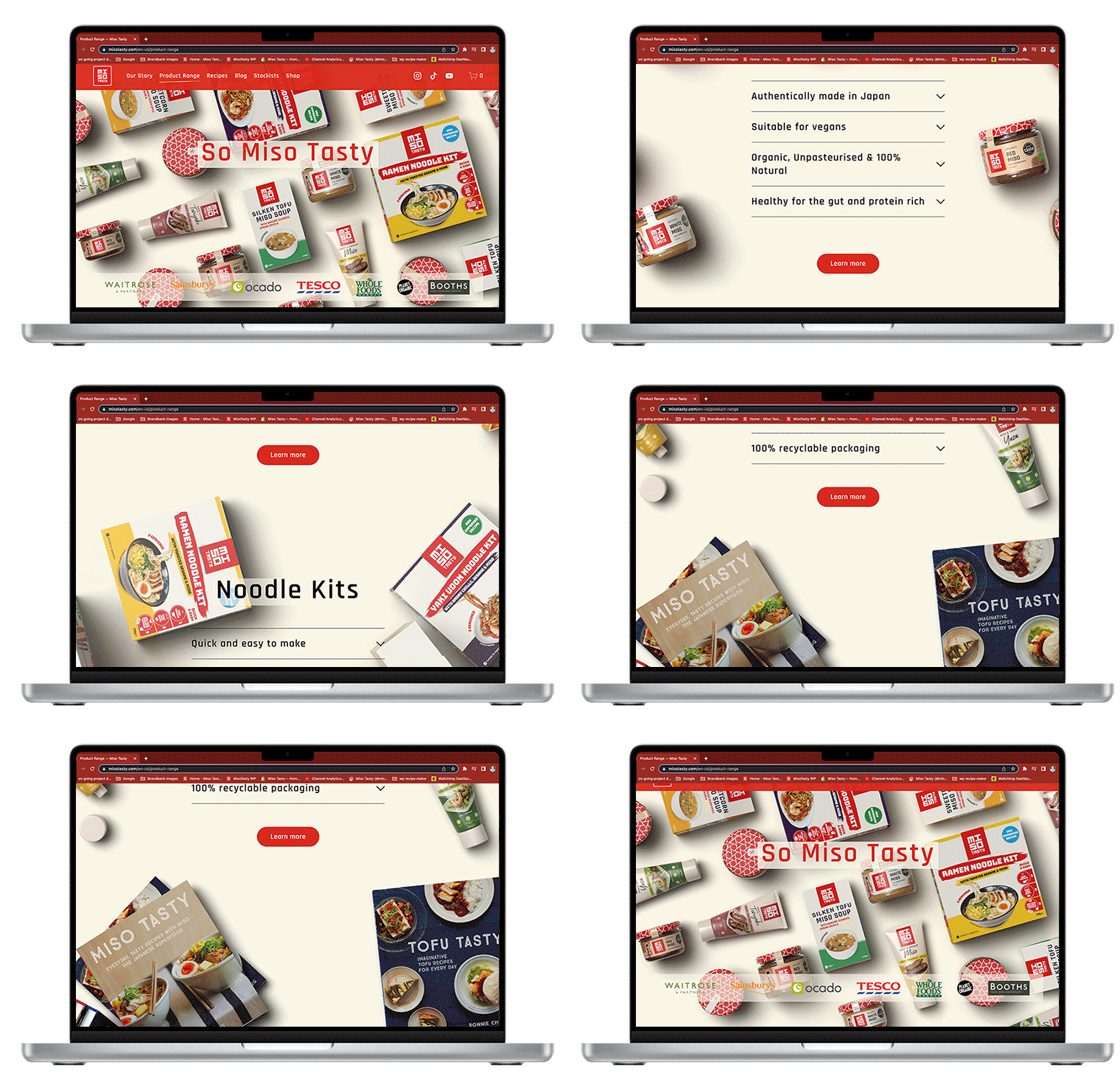
I implemented a "Technical Transformation" strategy to clean up the user journey and refresh the brand’s visual assets. I decoupled recipes from a legacy blog to create a search-led Recipe Engine and self-taught a 3D Asset Pipeline (Adobe Dimension) to "re-skin" old photography with updated product designs—effectively modernising the brand's digital legacy for the buyer at no cost.
The Strategic Impact:
-
M&A Readiness: Successfully refreshed the brand's digital infrastructure, directly contributing to the commercial viability and subsequent acquisition by Belazu Ingredients Co.
-
Asset Modernisation: Developed a cost-neutral 3D Visual Pipeline to repurpose legacy photography, a workflow that I have since scaled as a core visual infrastructure at Belazu.
-
Information Architecture (IA): Redesigned content silos to create a high-utility Recipe Engine, resolving high bounce rates and increasing on-site dwell-time.
-
Identity Architecture: Engineered a "pattern-first" recognition system on product lids to ensure brand unmistakable-ness across social media and television media.
The Strategic Lifecycle:
From Startup to Acquisition Integration
Stage 1: The Digital Audit (The Pivot)
-
The Intent: To identify and fix "leaks" in the user journey before the company went to market.
-
The Experience: Noticed high scan rates on QR codes but high bounce rates on the site; identified that the "wholesale-first" legacy site was frustrating retail customers.
-
Strategic Impact: This was the Operational Cleanup. By moving to Squarespace and decoupling the Recipe Engine, I proved the brand could scale its digital engagement.
Stage 2: Resourceful Scaling (The 3D Workflow)
-
The Intent: To modernise the visual assets for the sale process without capital expenditure.
-
The Experience: Taught myself Adobe Dimension to composite 3D product renders into high-quality legacy photography, ensuring the brand looked current to potential buyers.
-
Strategic Impact: This demonstrated Technical Agility. It provided a high-end visual refresh that increased the "perceived value" of the company during the acquisition phase.
Stage 3: The Integration (Post-Acquisition)
-
The Intent: To transition the brand's digital and visual systems into the larger Belazu ecosystem.
-
The Experience: My work on the Omnichannel Handshake (QR codes to digital utility) and 3D Pipelines at Miso Tasty became the blueprint for my current leadership role at Belazu.
-
Strategic Impact: This is Systemic Continuity. It proves that the "Architecture" I build is not just for one project, but is a scalable framework that adds value to a parent corporation.



Omnichannel Experience Architecture:
Bridging Physical & Digital Ecosystems
Belazu Ingredients Company
The Business Challenge:
Physical product sampling often exists as a "dead-end" touchpoint—a high-cost marketing effort with limited data visibility or long-term digital engagement. The challenge was to transform a static, physical "Sample Box" into a trackable, cohesive gateway to the brand’s digital ecosystem.
The Solution:
I led the Experience Architecture for the Sample Box initiative, redesigning the customer journey to bridge the gap between physical interaction and digital discovery. Partnering closely with the IT department, I architected the logic for a bespoke microsite ecosystem. By implementing a system of custom, strategic QR codes, I transformed the unboxing process into a lead-generation tool that directs users into curated, role-specific digital narratives.
The Technical Impact:
-
Lifecycle Architecture: Successfully mapped and executed the transition from physical touch points to digital, context-aware ecosystems.
-
Cross-Functional Technical Lead: Acted as the bridge between creative vision and technical execution, working with the IT team to build a scalable backend capable of generating bespoke stakeholder environments.
-
Stakeholder Personalisation: Engineered a system for creating role-specific digital portals—tailored for journalists (asset kits), buyers (data hubs), and in-house chefs (collaborative R&D).
-
Operational Efficiency: By moving documentation online, I created a Dynamic Asset Hub that reduces print overhead and allows for real-time content updates, providing a breakthrough benefit without increasing developer overhead for every new project.

The User Journey:
From Tactile Handshake to Digital Ecosystem
Stage 1: Physical Delight (Components A & B)
-
The Intent: Create a premium, sensory "first contact" that validates the brand’s high-end positioning while solving complex logistics.
-
The Experience: The user encounters a thoughtfully engineered vessel (A) designed for Operational Versatility, supporting both ambient and 24-hour chilled transport. Upon opening, the brand-world photography and the strategic "pause" tray (B) provide an immediate emotional reward, grounding the user in the narrative.
-
Strategic Impact: This stage demonstrates Infrastructure Leadership by ensuring brand integrity remains intact throughout a high-friction courier lifecycle.
Stage 2: Curiosity (Component C)
-
The Intent: To act as the "Physical-to-Digital Bridge," converting tactile engagement into measurable digital intent.
-
The Experience: A handwritten postcard establishes a human connection, while a prominent QR code serves as a clear "Lead-Generation Gateway".
-
Strategic Impact: This is the moment of The Transition. I identified a traditional "dead-end" touchpoint and re-engineered it into a trackable entry point for the brand’s digital ecosystem.
Stage 3: Digital Utility (Component D)
-
The Intent: To provide Contextual Utility and high-value assets that empower the recipient to take the next professional step—be it a press article, a retail order, or a collaborative recipe refinement.
-
The Experience: The user lands on a Bespoke Microsite curated specifically for their role. A journalist finds press-ready imagery; a retail buyer finds technical specifications; and a collaborating partner finds interactive testing resources curated by the culinary team.
-
Strategic Impact: This represents Engineering Alignment. By collaborating with IT to build an automated asset delivery system, I eliminated the friction of manual file transfers and support tickets. This provided "concierge-level" service for stakeholders while maintaining a lean operational footprint.
Spatial Experience Architecture:
Anamorphic Environmental Installation
London Design Festival | Winning Commission for Grey London | 2003
The Brief & Environmental Challenge
The Grey London Advertising Building on Great Portland Street was a massive, brutalist, and unappealing post-war structure. Tasked by the London Design Festival to design a physical "wrap" for the exterior facade, the corporate challenge was to completely transform the public’s sensory engagement with the landmark building.
The Design Puzzle & Perspective Solution
Instead of using a decorative cover-up or a temporary marketing gimmick, I chose to celebrate and manipulate the sheer scale of the architecture. I engineered an anamorphic perspective installation using a precise grid of vertical and geometric lines:
-
Anamorphic Projection Engineering: Designed a massive system of lines that, when viewed from a precise vantage point directly in front of the main entrance, perfectly mapped out and compressed the visual volume of the building.
-
Environmental Chromatic Integration: By precision-matching the matte negative space of the installation to the sky’s exact pale blue, the entire building appeared to completely disappear into the atmosphere at a specific time of day, leaving only the structural lines floating in space.
-
Kinetic Abstraction: When viewed from any other angle by passersby, the installation transformed into a dynamic, shifting abstract pattern, transforming a static city block into a moving visual landscape.
Results
-
Panel Selection: Unanimously selected as the winning design by an elite judging panel featuring leadership from Grey London and the editor of Creative Review.
-
Media & Industry Footprint: Featured across national print media and in the Central Saint Martins Directory 2005 -2006.


Perspective Blueprints, Structural Silhouettes, and Original Site Analysis.
